Benefits of Hiring a Fractional CMO
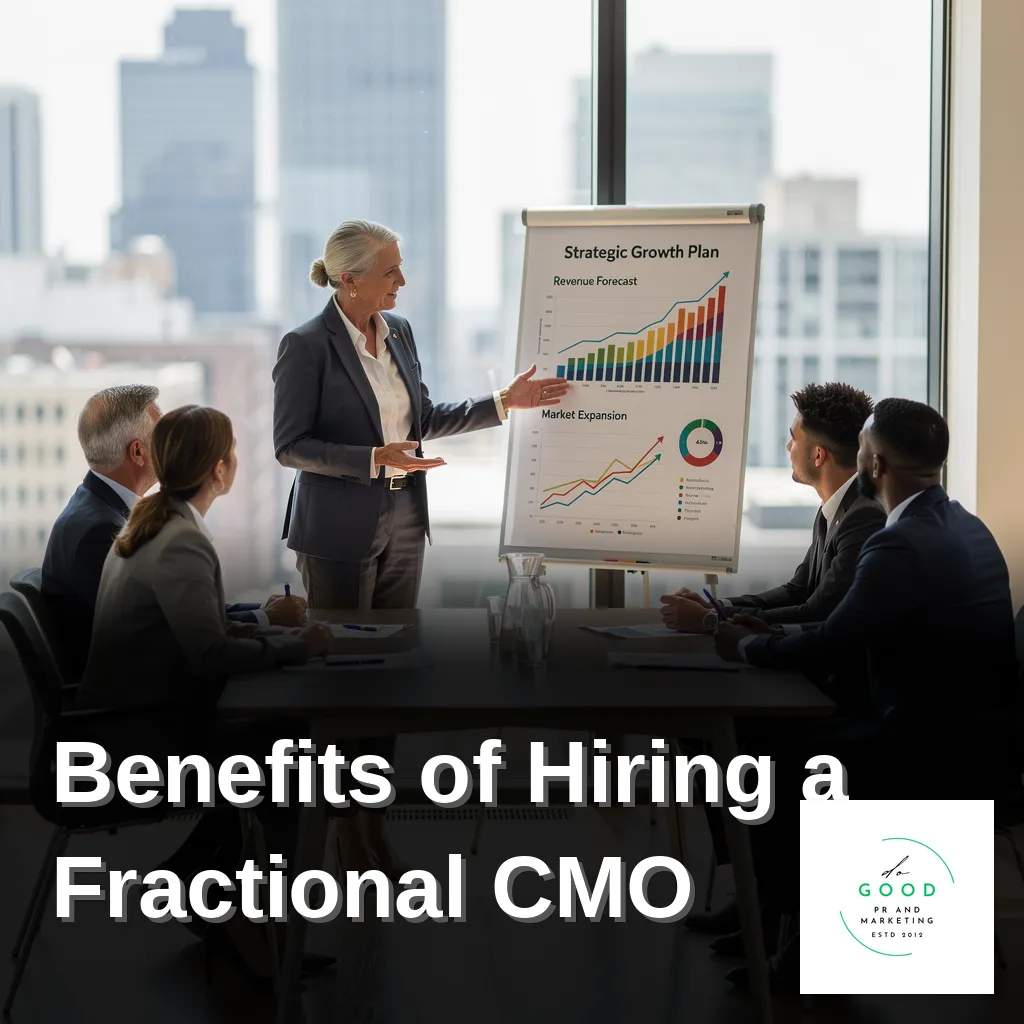
When it comes to Benefits of Hiring a Fractional CMO, fractional CMO benefits for growing brands in 2026 include senior-level marketing strategy at 5 to 20 hours per week, avoiding a full-time salary while budgets stay near 7.8% of revenue. Leaders gain executive guidance, purpose-aligned growth planning, and measurable outcomes, closing the gap between limited resources and the demand for strategic, revenue-focused marketing leadership.
What Benefits Come With Hiring a Fractional CMO?
Senior marketing leadership without a full-time executive hire stands as the core advantage of this model. Growing companies gain a decision-maker who sets clear priorities, holds teams and vendors accountable, and directs strategy at the executive level. Full-time salary commitments disappear from the equation, freeing budget for the campaigns and channels that actually drive revenue.
The benefits of hiring a fractional CMO extend beyond cost savings alone. A part-time executive brings the same caliber of strategic thinking a full-time chief marketing officer would offer, applied to revenue growth, brand positioning, and public relations. Businesses gain leadership that ties marketing decisions directly to broader company goals rather than isolated tactics.
Does a fractional CMO replace a full marketing team?
No, a fractional CMO directs and sharpens the work of an existing team rather than replacing it. The role supplies strategy, prioritization, and accountability, while internal staff or outside specialists handle execution.
What should leadership expect from this arrangement?
Expect measurable focus on outcomes tied to revenue, brand trust, and reputation. Growing brands gain:
- Executive-level marketing strategy without a permanent hire
- Clearer priorities across campaigns, PR, and messaging
- Accountability for outcomes, not just activity
- Growth strategies built to align with company mission and purpose

- 5–20 hours per week – typical fractional CMO time commitment
- 7.8% of revenue – current average marketing budget benchmark
- 56% of CMOs – report that budget level as insufficient to cover strategy execution
- Executive-level strategy – senior marketing direction without a full-time hire
- Accountability – measurable focus on outcomes, not just activity
- Purpose alignment – growth strategies built around company mission
How Does A Fractional CMO Save Marketing Budget?
A fractional chief marketing officer reduces marketing spend by replacing a full salary with a scaled, part-time engagement. Company marketing budgets have stalled at 7.8 percent of company revenue. 56 percent of chief marketing officers report that figure fails to cover strategy execution, according to What Is a Fractional CMO? Cost, Benefits & How to Hire. Committing scarce budget to one full-time executive salary raises the risk that other campaigns, hires, or tools go unfunded.
The part-time structure is where the savings originate. A fractional CMO typically works between 5. 20 hours per week, delivering executive strategy and accountability for a fraction of the cost of a permanent hire.
What Does A Fractional CMO Actually Cost Compared To A Full-Time Hire?
Cost scales with hours committed, not with a fixed annual salary. Leaders gain senior-level direction on marketing spend without the payroll, benefits, and overhead tied to a full-time executive position.
Beyond hourly savings, the model eliminates the need to build a marketing department from scratch. Benefits of hiring a fractional CMO include access to full-service execution — brand strategy, integrated campaigns, and audience engagement — without the overhead of assembling an internal team. This structure lets growing companies direct funds toward campaigns rather than fixed headcount, preserving budget for measurable, mission-aligned growth.

How To Choose A Purpose-Aligned Fractional CMO?
Sector expertise, not agency size, determines fit. Deep, demonstrated experience within a brand's specific industry matters more than a large logo roster or a lengthy client history. A mid-sized company evaluating candidates should treat industry fluency as the deciding factor over name recognition.
Purpose alignment separates a transactional hire from a true growth partner. Do Good! Marketing and Public Relations builds strategies around a mission-first methodology, pairing measurable revenue outcomes with messaging that reflects what a brand actually stands for. This approach matters most for leaders who need growth that reinforces reputation rather than working against it, revealing some of the benefits of hiring a fractional cmo that go beyond a lower price tag.
What proof should a leader look for before hiring?
Evidence beats promises. Organizations such as Riverbend Nonprofit Alliance, Northside Coffee Roasters, and Bright Path Health have credited Do Good! with results tied directly to each organization's core mission, not generic marketing wins.
A short evaluation checklist helps narrow the field:
- Documented experience in the brand's sector or a comparable one
- A track record connecting campaign results to mission-driven outcomes
- Client feedback describing alignment with organizational values, not just metrics
- Willingness to tie compensation or scope to measurable growth
Leaders who apply these standards avoid hiring on reputation alone and instead select a fractional CMO built for their specific context.
Conclusion
Fractional CMO benefits for growing brands in 2026 center on senior-level marketing strategy delivered without the cost of a full-time executive hire. The engagement model's core attributes—5 to 20 hours of weekly executive involvement, budget efficiency measured against the 7.8 percent revenue benchmark, and direct accountability for outcomes—close the gap between limited resources and the demand for strategic marketing leadership. Purpose alignment remains the differentiator that separates a transactional hire from a true growth partner, as reflected in Do Good! Marketing and Public Relations' mission-first approach to measurable revenue results. Leaders ready to close that gap can weigh sector expertise and demonstrated mission alignment as the standards for selecting the right fractional CMO partner.